





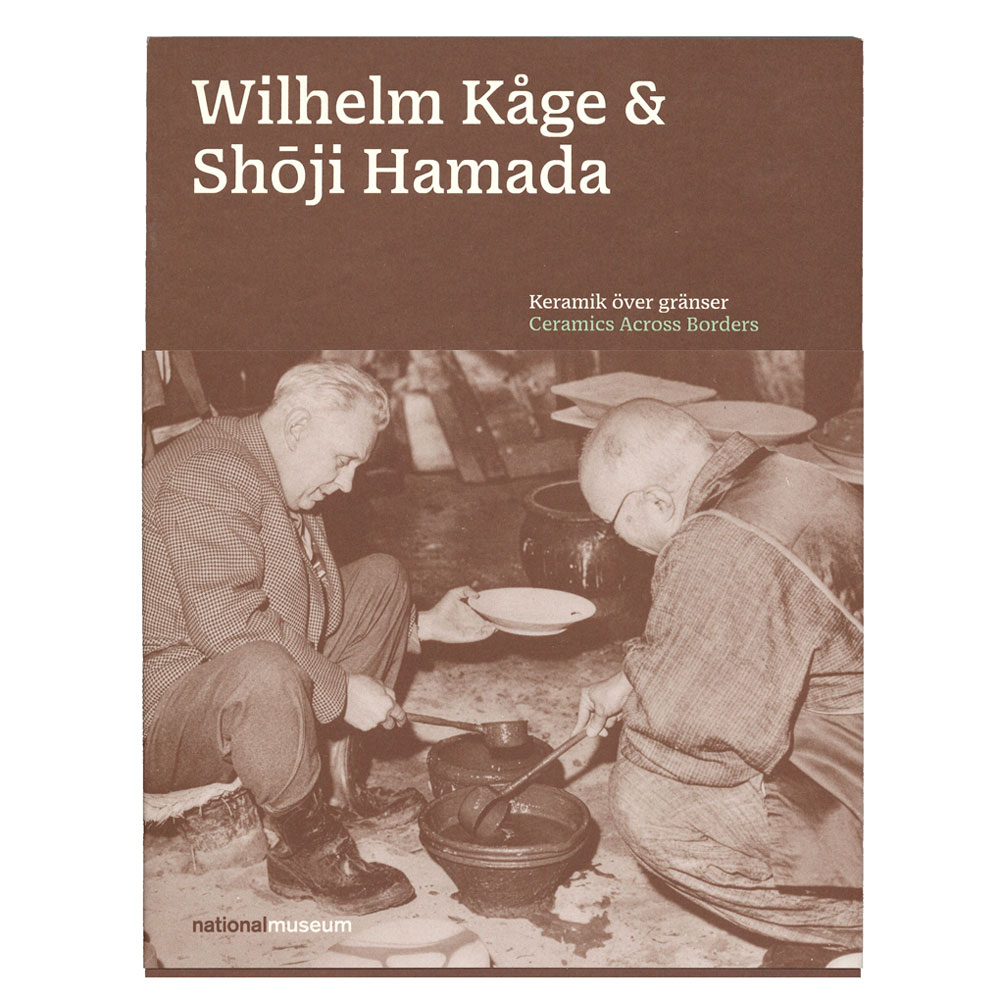
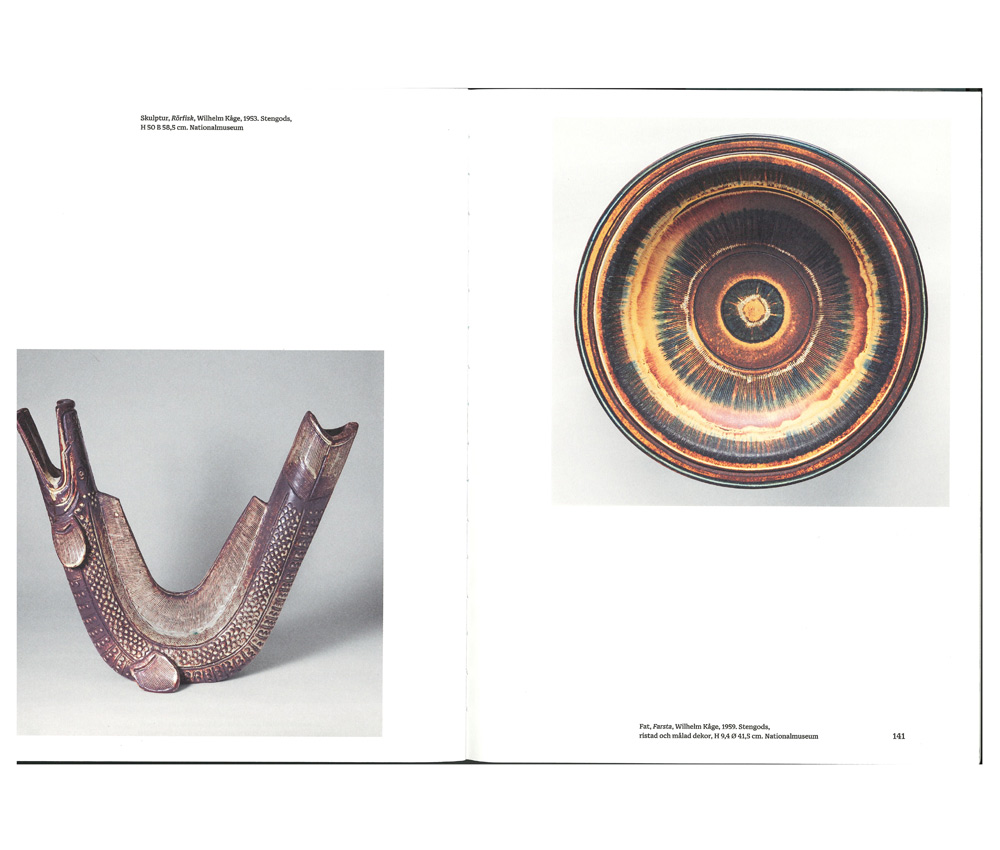
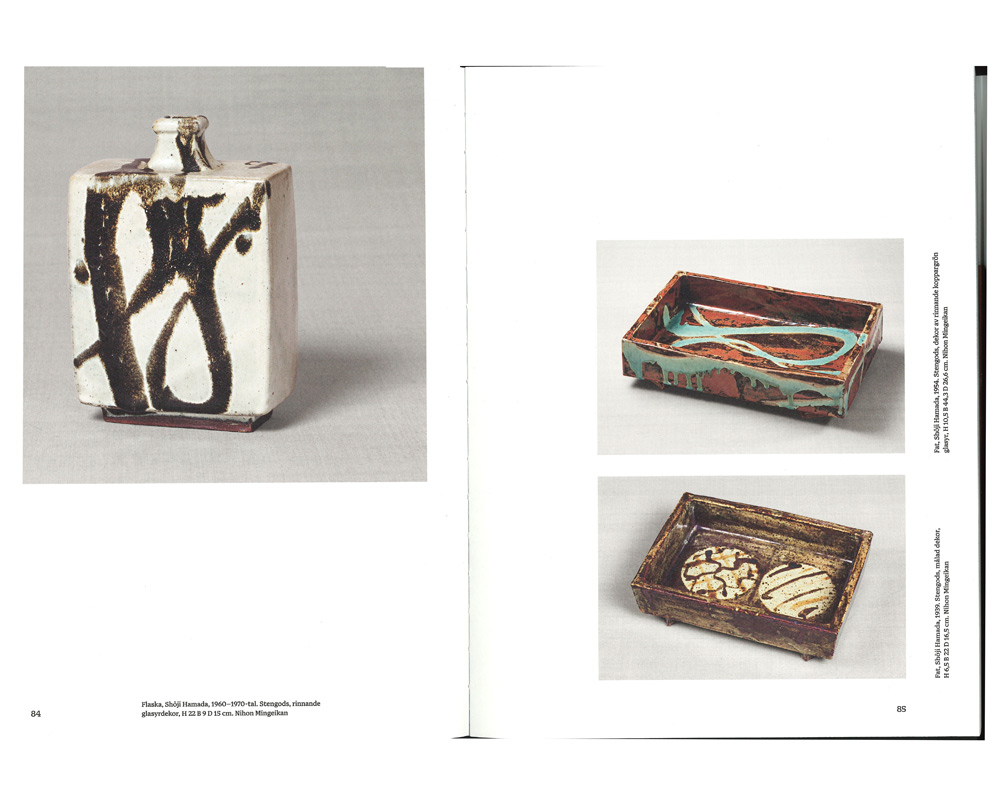
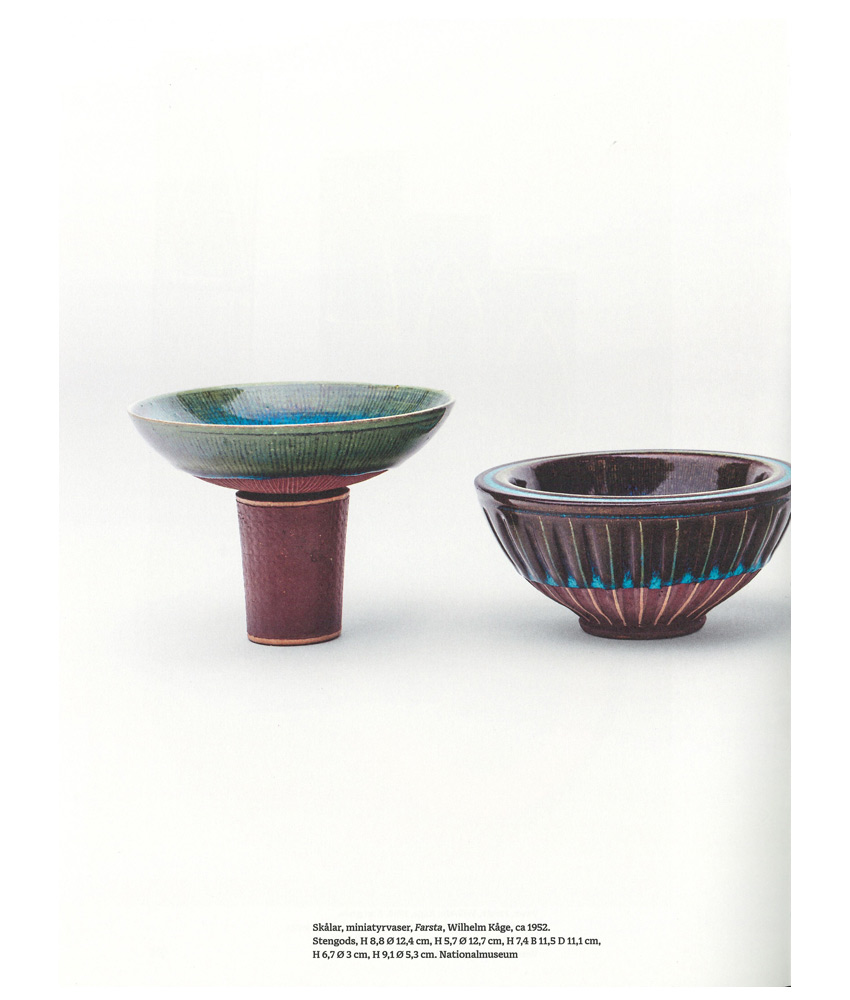
Wilhelm Kåge & Shoji Hamada: Ceramics Across Borders
€50
Keyword: 20th century, ceramics, Gustavsberg, studio pottery, Japanese craft, Swedish designer, Japanese artist
Swedish title: Keramik över gränserSize: 220 × 288 mm
Pages: 206
Format: softcover
Language: Swedish with English translation in the back
Illustration: richly illustarted
Editor:Helena Kåberg
Preface: Patrick Amsellem Introduction: Helene Kåberg
Text: Helena Kåberg, Takuji Hamada, Ulrika Schaeder
Book design: Karl Stefan Andersson
Printing: Livonia
Publisher: Nationalmuseum
Pub Year: 2026
Weight: 885 gr
ISBN: 9789171009500
Exhibition: Nationalmuseum, Stockholm 2026-27
Description
Article no.: 9789171009500
Cross-cultural dialogue between two masters: studio pottery meets industrial ceramics. The exhibition will travel to Bard Graduate Center Gallery in spring 2027.
More:
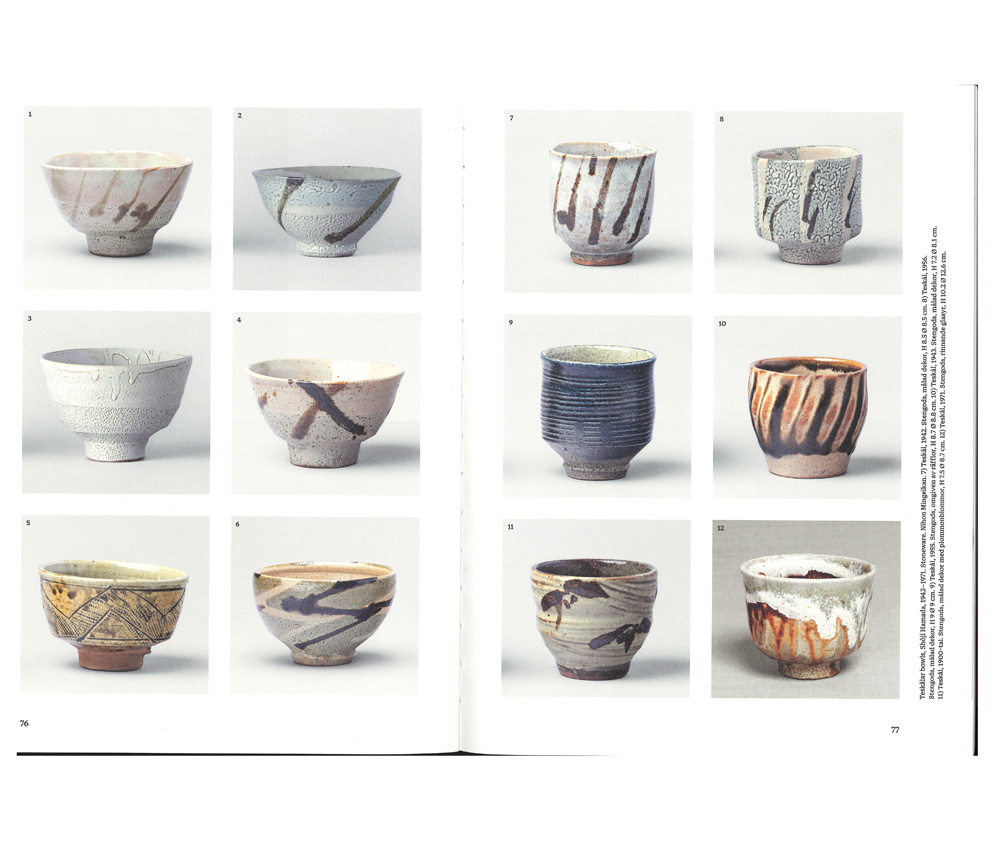
Wilhelm Kåge (1889–1960) and Shōji Hamada (1894–1978) approached ceramics from opposite institutional positions yet arrived at a remarkably convergent artistic ethos. Kåge, recruited to Gustavsberg's porcelain factory in 1917 on the strength of his work as a poster artist rather than any training in clay, spent the following decades reconciling industrial production with artistic ambition — from the Lily Blue service of his first year through the ovenware and Argenta lines that accompanied Swedish functionalism's emergence at the 1930 Stockholm Exhibition. Hamada, by contrast, trained as a potter, worked alongside Bernard Leach in England, and in the 1920s co-founded mingei with the critic Sōetsu Yanagi, a movement that elevated anonymous, utilitarian folk craft to the status of fine art and treated the handmade object as a deliberate counterweight to mechanization. Both, despite these divergent trajectories, drew on a shared inheritance from the British Arts and Crafts movement and its critique of industrial society's effect on everyday material culture.
Their relationship developed across three decades and two continents. Hamada's first visit to Sweden, in 1929, was oriented toward the ethnographic collections of the Nordiska museet and Skansen, evidence of an interest in folk material culture that already extended well beyond Japan. He returned in 1952, accompanied by Yanagi, to visit Kåge at Gustavsberg; in 1956 Kåge reciprocated, traveling to Japan and spending nearly two weeks as Hamada's guest in Mashiko, the town Hamada had established as a center of mingei production. By 1958, when the New York Times reviewed a Kåge exhibition in New York, the two were named alongside Leach as the three leading ceramicists working internationally — a measure of how thoroughly their reputations had become linked in postwar critical reception, notwithstanding the very different production contexts, industrial and artisanal, from which each emerged.
These exchanges were never purely personal. In the broader context of postwar Swedish–Japanese cultural diplomacy, artists of Kåge's and Hamada's stature were routinely enlisted, whether by design or by circumstance, into a wider apparatus of soft power: museum exchanges, state-sponsored exhibitions, and craft delegations that served to consolidate goodwill, cultural prestige, and eventually trade between the two nations as each redefined its international position after the war. Read in this light, the friendship between Kåge and Hamada stands as more than a case study in convergent aesthetics — it is also a record of how ceramic practice, ostensibly the most domestic and utilitarian of arts, became entangled with the diplomatic ambitions of two design cultures seeking mutual recognition on the international stage.
More:
Wilhelm Kåge (1889–1960) and Shōji Hamada (1894–1978) approached ceramics from opposite institutional positions yet arrived at a remarkably convergent artistic ethos. Kåge, recruited to Gustavsberg's porcelain factory in 1917 on the strength of his work as a poster artist rather than any training in clay, spent the following decades reconciling industrial production with artistic ambition — from the Lily Blue service of his first year through the ovenware and Argenta lines that accompanied Swedish functionalism's emergence at the 1930 Stockholm Exhibition. Hamada, by contrast, trained as a potter, worked alongside Bernard Leach in England, and in the 1920s co-founded mingei with the critic Sōetsu Yanagi, a movement that elevated anonymous, utilitarian folk craft to the status of fine art and treated the handmade object as a deliberate counterweight to mechanization. Both, despite these divergent trajectories, drew on a shared inheritance from the British Arts and Crafts movement and its critique of industrial society's effect on everyday material culture.
Their relationship developed across three decades and two continents. Hamada's first visit to Sweden, in 1929, was oriented toward the ethnographic collections of the Nordiska museet and Skansen, evidence of an interest in folk material culture that already extended well beyond Japan. He returned in 1952, accompanied by Yanagi, to visit Kåge at Gustavsberg; in 1956 Kåge reciprocated, traveling to Japan and spending nearly two weeks as Hamada's guest in Mashiko, the town Hamada had established as a center of mingei production. By 1958, when the New York Times reviewed a Kåge exhibition in New York, the two were named alongside Leach as the three leading ceramicists working internationally — a measure of how thoroughly their reputations had become linked in postwar critical reception, notwithstanding the very different production contexts, industrial and artisanal, from which each emerged.
These exchanges were never purely personal. In the broader context of postwar Swedish–Japanese cultural diplomacy, artists of Kåge's and Hamada's stature were routinely enlisted, whether by design or by circumstance, into a wider apparatus of soft power: museum exchanges, state-sponsored exhibitions, and craft delegations that served to consolidate goodwill, cultural prestige, and eventually trade between the two nations as each redefined its international position after the war. Read in this light, the friendship between Kåge and Hamada stands as more than a case study in convergent aesthetics — it is also a record of how ceramic practice, ostensibly the most domestic and utilitarian of arts, became entangled with the diplomatic ambitions of two design cultures seeking mutual recognition on the international stage.